

The Honorable Judge William H. Webster has been presented with Lifetime Achievement award by IACIPP
The Honorable Judge William H. Webster has been presented with Lifetime Achievement award by the International Association of Critical Infrastructure Protection Professionals (IACIPP)
The award recognises his incredible service, not only to his country but to the global security community. Chairman of the IACIPP, John Donlon QPM, said “There can be few more deserving candidates for this Award and it is our honour to recognise his achievements and service.”
 The Award was presented on behalf of the IACIPP by Mr Jeff Gaynor, CIPRNA Conference Committee Member.
Judge Webster is a former Director of the Federal Bureau of Investigation, the Central Intelligence Agency and the United States Intelligence Community and Chairman, Homeland Security Advisory Council. He continues to serve America as the Chairman of the Homeland Security Advisory Council, U.S. Department of Homeland Security.
Judge Webster, proclaimed by Governor Tom Ridge the First Secretary of the U.S. Department of Homeland Security “A National Treasure,” was born on March 6, 1923, in St. Louis, Missouri. Judge Webster was awarded his Bachelor of Arts degree from Amherst College and received a Juris Doctor degree from Washington University in 1949. Judge Webster served as a United States Navy Lieutenant during World War II and the Korean War. A practicing attorney from 1949 to 1959, in 1960, Judge Webster became the United States Attorney for the Eastern District of Missouri and from 1964 to 1969 was a member of the Missouri Board of Law Examiners. In 1970 Judge Webster was elevated to the United States Court of Appeals for the Eighth Circuit.
In February 1978, Judge Webster was appointed by President Jimmy Carter as Director of the Federal Bureau of Investigation. Appointed by President Ronald Reagan, from May 1978 to August 1991 Judge Webster served as the Director of the Central Intelligence Agency and the Director, U.S. Intelligence Community. Judge Webster is the only person in U. S. History to serve in all three of these National Security positions. Upon his retirement from Federal service in 1991, Judge Webster practiced law in the Washington, DC offices of Milbank, Tweed, Hadley & McCloy, LLP. He has maintained an office there since his retirement.
In August 2005, Judge Webster was appointed by President George W. Bush as Chairman of the Homeland Security Advisory Council (HSAC). With the cascading consequences of the long-anticipated failure of the New Orleans Levee System still being inflicted, Judge Webster spearheaded an HSAC study into the adequacy of U.S. Critical Infrastructure Protection policies and programs. In January 2006, the HSAC’s “Report of the Critical Infrastructure Task Force” made public its principal recommendation: “Promulgate Critical Infrastructure Resilience as the top-level strategic objective — the desired outcome to drive national policy and planning.” The HSAC’s subsequent June 2011 “Community Resilience Task Force Recommendations” provided the vision and means to operationalize resilience in communities throughout America.
Judge Webster holds 18 honorary degrees and Doctorates and in further recognition of his singularly unique service to the Nation and among his many awards, Judge Webster is the recipient of the Presidential Medal of Freedom; the Distinguished Intelligence Medal; and the National Security Medal. In August 2017, the National Spy Museum presented to Former President George H. W. Bush The Honorable William H. Webster Distinguished Service Award.
Judge Webster was married to the late Drusilla Lane Webster for 34 years and is the father of three children. In 1990, Judge Webster married Lynda Clugston. Residing in the Washington, DC area, they enjoy seven grandchildren, a golden retriever, a tabby cat and three horses.



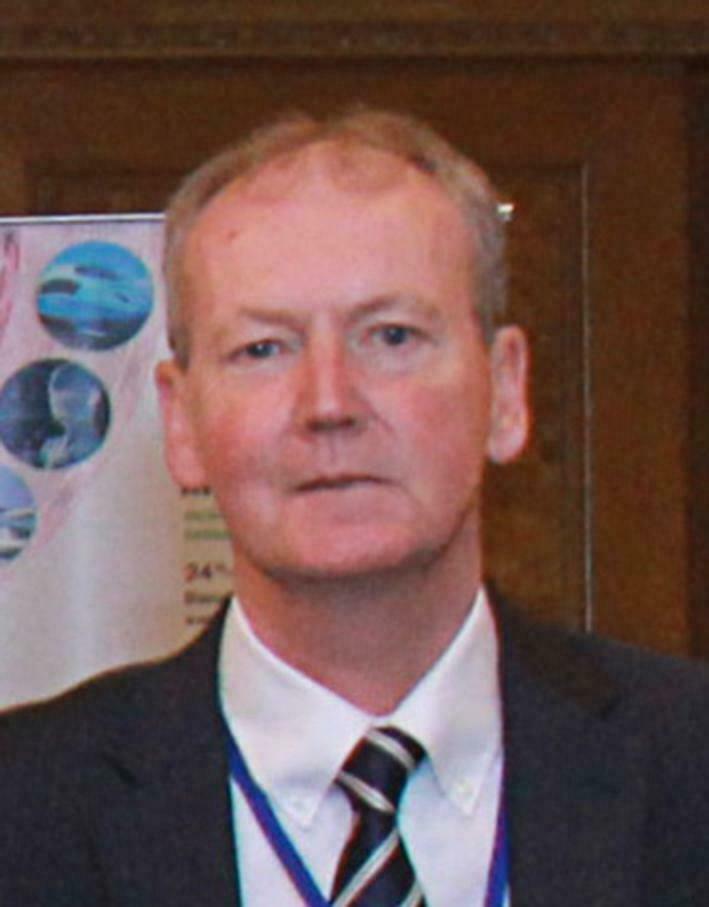

 Bill Bailey is currently a security management consultant working in the oil and gas industry predominately in Papua New Guinea. Bill also remains an Adjunct Senior Lecturer with Edith Cowan University, Security Research Centre, Perth, Australia after having taught in the Security Science Department, specialising in: counter insurgency, terrorism and countering terrorism, critical infrastructure protection, security management, physical security, security, health and safety, business continuity, strategic risk and emergency management.
 Frédéric Petit is a Research Scientist specialising in critical infrastructure interdependencies and resilience at Argonne National Laboratory. Dr. Petit leads the development of methodologies for the assessment of preparedness, mitigation, response, recovery, and overall resilience capabilities of facilities, communities, and regions. He also lends his expertise to work on risk, vulnerability and threat analysis of critical infrastructure. Dr. Petit received his PhD from the École Polytechnique de Montreal in Civil Engineering focusing on vulnerability analysis techniques for critical infrastructure and dependencies on cybernetics. After an initial formation in earth sciences and civil engineering, Dr. Petit has specialized in risk management and business continuity since 2002. Dr. Petit is member of various program committees for conferences such as the Symposium on Risk Management and Cyber-Informatics (RMCI) and the Critical Infrastructure Symposium (CIS)..
 Ayhan was formerly a researcher for the Center on Foreign Policy and Security in Hazar Strategy Institute (HASEN); Coordinator CIPALERT(Critical Infrastructure Protection Alert) Platform