DHS Has Strengthened the Securing the Cities Program, but Actions Are Needed to Address Key Remaining Challenges
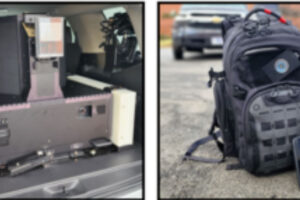
The Department of Homeland Security's Securing the Cities program is trying to reduce the risk of terrorist attacks in high-risk urban areas. This program helps state and local agencies in 13 regions detect radiological and nuclear materials that could be used in such attacks—such as by funding the purchase of wearable radiation detectors for police officers.
The agency regularly meets with the regions to check in and help address specific issues with this program. However, the agency hasn't clearly communicated to the regions how it plans to measure performance and progress.
The Department of Homeland Security's Countering Weapons of Mass Destruction Office (CWMD) has taken multiple steps to strengthen the Securing the Cities (STC) program and is working with regions to address remaining program implementation challenges. CWMD awards funding to support STC regions' program administration. It also funds the procurement and deployment of radiological and nuclear detection equipment and training for the law enforcement officers and other agency partners who use it. To strengthen the program, CWMD has increased outreach and communication activities, developed templates for regional planning and quarterly reporting, and ensured regions' access to long-term federal funding to sustain their STC-related capabilities.
As CWMD continues to improve the program, it is also working with STC regions to address challenges that may affect program implementation. Regions identified several key challenges, including staff attrition and turnover; availability and difficulty of scheduling training courses; and keeping partner agencies engaged with the STC program mission among other competing priorities.
The U.S. faces an enduring threat that terrorists could steal or smuggle nuclear or radiological materials to use in a terrorist attack. The Department of Homeland Security initiated the STC program as a pilot in 2007 to reduce the risk of such attacks by developing and enhancing sustainable radiological and nuclear detection capabilities of state and local agencies in high-risk urban areas. The program includes 13 regions. CWMD awarded about $300 million to these regions through fiscal year 2023.
The CWMD Act of 2018 included a provision for GAO to evaluate the STC program once CWMD completed an assessment of the program, which it did in 2022. This report evaluates (1) CWMD's efforts to strengthen the STC program and address regions' challenges and (2) the extent to which CWMD is measuring and tracking STC regions' performance.
GAO reviewed CWMD and STC regions' documents, interviewed officials from CWMD and from each region, and visited two regions carrying out training exercises. GAO compared CWMD's performance assessment approach with key practices for assessing program effectiveness that GAO identified in prior work.
GAO is making five recommendations, including that CWMD clearly communicate performance expectations to STC regions, collect quality information from the regions, and ensure regions' timely progress through program phases and toward achieving program goals. DHS concurred with the recommendations.
CWMD's approach to measuring and tracking regions' performance—outlined in a 2023 revision to its STC program implementation plan—generally follows the key practices and their supporting actions for assessing program effectiveness. For example, CWMD uses weekly or biweekly meetings with the STC regions to provide tailored information that regions need to address specific issues affecting their program implementation. However, it has not clearly communicated to the regions the performance expectations and planned assessment approach adopted in the revised plan. By doing so, CWMD would increase the transparency and accountability for results being achieved through the program.
CWMD is collecting and reviewing regional performance data to set targets and benchmarks for assessments that it plans to begin in fiscal year 2025. However, it needs to take additional steps to ensure that information collected from the regions is timely, consistent, complete, and accurate. CWMD officials also stated that they need to complete ongoing and planned efforts to better oversee and hold regions accountable for their performance and timely progress through program phases and toward achieving program goals. By taking these steps, CWMD will be in a better position to use evidence to manage the STC program more effectively, demonstrate regions' progress toward meeting the program goals, and communicate these results to stakeholders.