The basis for safer digital finance

The transformations we are seeing in numerous fields – from energy and mobility to health care, agriculture, and financial services – all hinge on digital technologies, along with an array of associated business ecosystems. All these technologies and systems must be reliable, secure and deserving of our trust.

The Financial Inclusion Global Initiative (FIGI) is an open framework for collaboration led by the International Telecommunication Union (ITU), the World Bank Group, and the Committee on Payments and Market Infrastructures (CPMI).

Our partnership brings together the expertise to accelerate digital financial inclusion. With the support of the Bill & Melinda Gates Foundation, we have brought together the full range of stakeholders set to benefit from this expertise.

The World Bank Group and CPMI have helped to build a strong understanding of the policy considerations surrounding digital identity and incentivizing the use of electronic of payments.

ITU’s work has focused on security, infrastructure and trust – secure financial applications and services, reliable digital infrastructure, and the resulting consumer trust that our money and digital identities are safe.
No more secrets

Considering the prevalence of data breaches, the need for strong authentication is clear, with discussions in the industry often noting that “there are no secrets anymore.”

New ITU standards for a universal authenticator framework (X.1277) and client-to-authenticator protocol (X.1278) are helping overcome the security limitations of the "shared secret" approach, the basis for the widely familiar username-password model of authentication.

Users can now authenticate locally to their device using biometrics, with the device then authenticating the user online with public key cryptography. With the new standards, users are asked to authenticate locally to their device only once, and their biometric data never leaves the device. This model avoids susceptibility to phishing, man-in-the-middle attacks, or other forms of attack targeting user credentials.

FIGI engagement helped to usher these specifications, first developed by the FIDO (Fast Identity Online) Alliance, into the ITU standardization process to stimulate their adoption globally. Authentication options consistent with X.1277 and X.1278 are now supported by most devices and browsers on the market.
Fortifying a walled garden

In developing countries, digital financial services are often provided over Signalling System No.7 (SS7), a legacy network protocol standardized by ITU in the late 1970s. SS7 enables all network operators to interconnect and looks sure to remain in use for years to come.

But security was not considered in its design. SS7 was designed as a walled garden. Entry to the SS7 network was intended to be highly regulated, with only trusted network operators being granted access. But malicious actors have since found various ways to get hold of the keys, especially since some of the initial design and deployment assumptions were no longer valid with the introduction of deregulation, voice over IP, and mobile networks.

FIGI has worked to raise awareness about SS7’s security vulnerabilities and associated mitigation techniques. As the need to mitigate these vulnerabilities increases, network operators can look to ITU’s new Q.3057 standard outlining signalling requirements and architecture for interconnection between trustable network entities. This is another standard rooted in FIGI discussions.
Reliable, widely available connectivity

Trust in digital financial services is also acutely affected by the reliability and availability of connectivity. Network downtime and transaction failures resulting from dropped connections can erode the trust of consumers and merchants in digital financial services.

Investment in digital infrastructure must continue, with the industry adopting meaningful, widely accepted benchmarks for service quality. ITU standards specify the route towards reliable, interoperable network infrastructure, and they provide a wide range of tools to assess the performance and quality of the services running over this infrastructure.

FIGI highlighted the demand for service quality indicators specific to digital financial services. With the expertise on hand at ITU, we have delivered new standards describing key quality considerations for digital financial services (ITU G.1033) and a methodology to assess the quality of user experience (ITU P.1052).
Security across the value chain
Every industry player involved in providing digital financial services has to be concerned about security risks. Security is only as strong as its weakest link, and innovation in digital finance continues to extend the length and increase the complexity of the underlying value chain.

Secure digital finance calls for coordinated defences that are attuned to evolving security threats. A key FIGI report outlines the security assurance framework needed to achieve this for each actor in the digital finance value chain.

The best practices suggested by the framework could form the basis for a safer business ecosystem. They reflect the needs of everyone involved, from customers to network operators and digital finance providers, right through to third-party providers interfacing with the financial system.

[Source: ITU]
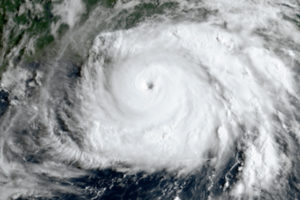
FEMA Continues Ida Response and Recovery Efforts

A week after Ida’s landfall in Louisiana, FEMA has given more than $165 million in grants to Louisiana survivors to help them begin their recovery. FEMA also received more than 13,500 National Flood Insurance Program claims from the affected states for processing.

People can help survivors and communities impacted by Hurricane Ida by donating to or volunteering with the voluntary or charitable organization of their choice, many of which are already in areas impacted by Ida and supporting survivors. Learn how to best help those in need.
Federal Actions to Support Areas Affected by Hurricane Ida

On Sept. 2, FEMA announced changes to its Individual Assistance program to better support disaster survivors by reducing the barriers to agency programs that aid underserved populations. Changes in this new policy include expanding acceptance of different forms of documentation to prove ownership or occupancy, while also expanding assistance for a disaster-caused disability.

There are eight FEMA Incident Management Assistance Teams deployed to support states affected by Hurricane Ida. Five are in Louisiana, New Jersey, New York and Pennsylvania. Seven AmeriCorps FEMA Corps teams are supporting Louisiana recovery efforts.

The National Emergency Management Association is helping facilitate additional resources to the Gulf Coast through the Emergency Management Assistance Compact. Resources from 14 states have been sent to assist with ongoing response and recovery efforts.

Commodities, equipment and personnel are working throughout the affected areas. This includes:
Disaster Survivor Assistance teams are on the ground in Louisiana providing in-person assistance in New Orleans and other parishes.

Urban Search and Rescue (US&R) teams have completed more than 39,000 structural evaluations in affected areas in Louisiana.

More than 278 ambulance crews and 30 air ambulances are deployed and working in Louisiana.

Additional ambulances and air ambulances are in Mississippi to support impacted areas.

Mobile Emergency Response Support assets, including emergency operations vehicles, are deployed to support communication needs in Louisiana and New Jersey.

The Defense Logistics Agency has been activated for fuel support and leasing of additional generators. High output generators are in Baton Rouge, La.

In Louisiana, The U.S. Army Corps of Engineers (USACE) has activated its Operation Blue Roof program for parishes approved for individual assistance. Residents can sign up for the program and complete a Right of Entry form at Blueroof.us. Residents can call toll free 1-888-ROOF-BLU (1-888-766-3258) for more information regarding this program.

USACE Temporary Emergency Power Planning and Response Teams, contractor support, and the 249th Engineer Battalion’s power generation team are mobilized in Mississippi and Louisiana to conduct power assessments and installations.

The U.S. Department of Energy authorized the Strategic Petroleum Reserve to conduct an exchange of 300,000 barrels of crude oil between fuel storage companies in Louisiana to alleviate any logistical issues of moving crude oil within areas affected by Hurricane Ida. This action will help ensure the region has access to fuel as quickly as possible as they continue their recovery.

The U.S. Department of Agriculture (USDA) approved Louisiana’s request to allow Supplemental Nutrition Assistance Program households to use their benefits to purchase prepared meals and are assisting with program flexibilities needed for mass feeding operations. USDA’s Disaster Household Distribution program was approved and will provide food packages to 800,000 survivors in 19 parishes.
The U.S. Department of Health and Human Services (HHS) deployed more than 180 medical providers and other staff from the National Disaster Medical System to support the triage and treatment of patients in Louisiana. This includes three teams that will be providing Emergency Department decompression to three hospitals in Thibodaux, Kenner and Raceland. The team in Thibodaux will begin to see patients today. A 250-bed healthcare facility federal medical station at the New Orleans Ernest Morial Convention Center began seeing patients this weekend. Patients must be referred to the station.
The station is staffed by Disaster Medical Assistance personnel and credentialed medical volunteers identified by the Louisiana Department of Health.

The Salvation Army mobilized feeding kitchens and emergency response vehicles in Albany, Baton Rouge, Hammond, Houma, and Thibodaux Gonzalez, Kenner, LaPlace, Napoleonville, New Orleans and Raceland, La. These operations can feed up to 60,000 people a day.

The American Red Cross, with the help of their partners, has provided more than 49,000 meals and snacks for survivors in the Gulf Coast. There are more than 20 Red Cross and community shelters open in affected areas in Louisiana. There are 13 shelters open in New Jersey and three in New York.

The U.S. Department of Transportation (USDOT) Federal Motor Carrier Safety Administration announced an Emergency Declaration that provides truck drivers flexibility to move critical freight to areas damaged by Ida.

Additionally, USDOT activated an Emergency Relief Docket for railroads so they can get temporary safety regulations waivers to help them speed up service to move goods necessary for emergency relief efforts.

The Federal Communications Commission is working directly with wireless carriers so that those in affected areas can roam on any available network while restoration efforts are underway.


ICC and RESNET to Develop Standard on Remote Virtual Inspections for Energy and Water Performance in Buildings

The International Code Council, the leading global source of model codes and standards and building safety solutions, and RESNET, a national standards-making body for energy efficiency ratings and certification systems, will continue their long history of collaboration by developing a new American National Standards Institute (ANSI) candidate standard on remote virtual inspections (RVI) for the energy and water use performance of buildings. Previously, the two organizations have worked together to develop a new certification designation, the International Energy Conservation Code (IECC)/Home Energy Rating System (HERS) Compliance Specialist, and four other ANSI standards. Most recently, they advocated and received recognition of the Home Energy Rating System (HERS®) Index within California.

The new standard will provide guidance for implementing RVI for energy code compliance and for energy and water efficiency performance. Performance raters will be provided criteria to check all aspects of permitted construction for compliance with energy codes and other energy-related applicable laws and regulations. As a next step, a new Standard Development Committee will be formed to develop and maintain the standard with the Code Council and RESNET appointing representatives – both separately and jointly.

“Building construction is rapidly evolving and jurisdictions are being challenged to adapt,” said Mark Johnson, Executive Vice President & Director of Business Development, International Code Council. “The need for new inspection methods has been building for a while as the inspector workforce has shrunk and jurisdictions’ resources have come under financial pressure. The pandemic also increased the pressure to evolve, and quickly.”

RVI is a tool to address these problems and organizations such as the Code Council have developed guidance documents to assist code enforcement entities.

“As more code enforcement departments begin their digital transformation and adopt technologies like RVI, there needs to be standardized criteria for how it is implemented,” said Steve Baden, Executive Director, RESNET. “A national consensus standard for RVI as it applies to energy- and water-use efficiency inspections and ratings will both provide code enforcement authorities with assurance that the ratings they adopt for code compliance are reliable, as well as advance the efficiency and efficacy potentials of these new approaches to determining code compliance.”

The standard would be co-sponsored by the Code Council and RESNET and developed using RESNET’s ANSI accredited procedures as an American National Standard by ANSI. For more information on RVI, the Code Council released a whitepaper, Recommended Practices for Remote Virtual Inspections (RVI), which will be the foundation for the development of the new consensus standard.

Keystone Accidents Investigated by GOA

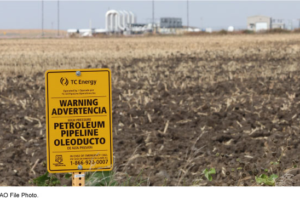
The Department of Transportation's Pipeline and Hazardous Materials Safety Administration (PHMSA) required TC Energy to take additional safety measures specified in a special permit as conditions of allowing certain portions of the Keystone Pipeline (Keystone) to operate at a higher stress level than allowed by regulation. PHMSA reviewed technical information and drew on its experience granting similar permits to natural gas pipelines to develop 51 conditions with which TC Energy must comply. Most pipeline safety and technical stakeholders GAO interviewed agreed the conditions offset the risks of operating at a higher stress level. However, PHMSA did not allow TC Energy to fully operate Keystone at this higher stress level until 2017, after TC Energy replaced pipe affected by industry-wide pipeline quality issues.

Keystone's accident history has been similar to other crude oil pipelines since 2010, but the severity of spills has worsened in recent years. Similar to crude oil pipelines nationwide, most of Keystone's 22 accidents from 2010 through 2020 released fewer than 50 barrels of oil and were contained on operator-controlled property such as a pump station. The two largest spills in Keystone's history in 2017 and 2019 were among the six accidents that met PHMSA's criteria for accidents “impacting people or the environment.” According to PHMSA's measures for these more severe types of accidents, from 2010 to 2020 TC Energy performed better than nationwide averages, but worse in the past five years due to the 2017 and 2019 spills.

The Keystone Pipeline has transported over 3 billion barrels of crude oil from Canada to U.S. refineries since 2010. Keystone's accident history is similar to other pipelines, but the severity of its spills has worsened in recent years due to 2 large spills in 2017 and 2019.

The Department of Transportation required Keystone operator TC Energy to investigate and address the root causes of the 4 largest spills. DOT has also issued enforcement actions and civil penalties for problems like inadequate corrosion prevention. Based on Keystone "lessons learned," DOT has increased inspection resources for other pipelines during construction.

In response to each of Keystone's four largest spills, PHMSA issued Corrective Action Orders requiring TC Energy to investigate the accidents' root causes and take necessary corrective actions. These investigations found that the four accidents were caused by issues related to the original design, manufacturing of the pipe, or construction of the pipeline. PHMSA also issued other enforcement actions and assessed civil penalties to TC Energy for deficiencies found during inspections, such as inadequate corrosion prevention and missing pipeline markers. Based in part on its experience overseeing Keystone, PHMSA officials said they have increased resources to conduct inspections during construction of other pipelines and are establishing a more formal process to document and track the compliance of all special permits, including Keystone's permit.

How ITU provides emergency telecommunications in a pandemic

“We have to prepare everything in advance so that when a disaster strikes, the only thing that we have to do is pack the equipment and take it to where it is needed,” explained Jake Spinnler from ITU’s Emergency Telecommunications Division.

Spinnler is part of the ITU Emergency Telecommunications team and currently coordinating ITU’s Emergency Telecommunications Roster (ETR), a voluntary group of ITU staff from across the organization on stand-by to deploy the services on short notice.

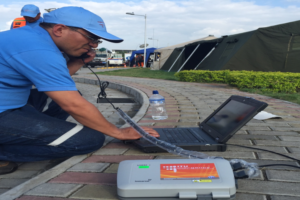
“In the last few months, we have been checking and testing the satellite phones and Broadband Global Area Network (BGAN) terminals to see if the equipment is complete, if it works correctly or we need to buy spare parts,” added Spinnler, who has been trained to use emergency telecommunications equipment, helping to ensure vital communication networks are maintained during relief efforts.
The year of disasters

Disasters don’t stop during a pandemic. In 2020, 389 disasters impacted 98.4 million people globally.

Additionally, according to the recently released Intergovernmental Panel on Climate Change (IPCC) report, Climate Change 2021: The Physical Science Basis, extreme weather events that we are facing today – from cyclones in India to devastating floods in China, widespread wildfires in North America and enduring droughts across Africa – are set to continue and worsen in the decades to come.

Telecommunication networks are critical to coordinating relief efforts, but are often destroyed when disaster strikes.

At the request of Member States, in the aftermath of a disaster, ITU deploys temporary information and communication technology (ICT) solutions to help restore telecommunication links needed for response efforts. The ITU ETR is a new addition to this service.

“I have visited nearly all countries in the world, taking this equipment to help them to use it for response coordination efforts and assist in recovery from disasters,” said Maritza Delgado, ITU’s Emergency Telecommunications Programme Officer.

“Sometimes these are the only phones that are available in the disaster zones, and the only channel for organizations to coordinate with different stakeholders in charge of overall disaster management.”

Direct impact on the ground

Although training was largely conducted online during the COVID pandemic – from using the equipment to personal safety training – some aspects still need to be done in person.

To ensure life-saving equipment is in full working order, the ETR team needs to test it regularly. This equipment includes BGAN terminals, Iridium satellite phones and other terminals.

“As a Radiocommunication Engineer, working with these satellite devices is a great opportunity for hands-on experience,” said Veronique Glaude, Senior Radiocommunication Engineer in ITU-R. “This equipment is vital to assist first responders for timely communication and enable them respond to the humanitarian needs of the affected individuals and communities. It is a real honour for me to be part of that process.”

For many ITU staff, being part of the ETR has had a positive impact on their work at ITU.

“One of my roles in ITU is Acting Advisor to ITU-T Study Group 2, which plays a leading role in ITU standards development for disaster relief, early warning, network resilience and recovery. The ETR provides a direct connection between theory and practice,” said Rob Clark, Study Group Project Coordinator in ITU-T.

“Being part of the ETR has enlightened me on the role that ITU is playing alongside its partners in the field of emergency telecoms and disaster relief. It also reminds me of the direct impact of ITU’s work on the ground. This is a useful perspective to incorporate into my ‘day job’ supporting ITU members’ development of international telecommunication standards,” he said.

During the COVID-19 pandemic, with in-person deployments suspended due to travel restrictions, ITU strengthened partnerships with satellite providers to provide the necessary connectivity and equipment.

These partnerships ensured that ITU could continue to support countries in the aftermath of disasters.

[Source: ITU]

GAO's publish survey about facial recognition technology (FRT) activities

Facial recognition—a type of biometric technology—mimics how people identify or verify others by examining their faces. Recent advancements have increased the accuracy of automated FRT resulting in increased use across a range of applications. As the use of FRT continues to expand, it has become increasingly important to understand its use across the federal government in a comprehensive way.

GAO was asked to review the extent of FRT use across the federal government. This report identifies and describes (1) how agencies used FRT in fiscal year 2020, including any related research and development and interactions with non-federal entities, and (2) how agencies plan to expand their use of FRT through fiscal year 2023.

GAO surveyed the 24 agencies of the Chief Financial Officers Act of 1990, as amended, regarding their use of facial recognition technology. GAO also interviewed agency officials and reviewed documents, such as system descriptions, and information provided by agencies that reported using the technology.

Recent advancements in facial recognition technology have increased its accuracy and its usage. Our earlier work has included examinations of its use by federal law enforcement, at ports of entry, and in commercial settings.

For this report, the GOA surveyed 24 federal agencies about their use of this technology.

- 16 reported using it for digital access or cybersecurity, such as allowing employees to unlock agency smartphones with it
- 6 reported using it to generate leads in criminal investigations
- 5 reported using it for physical security, such as controlling access to a building or facility
- 10 said they planned to expand its use

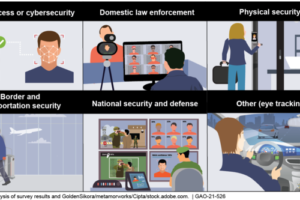
In response to GAO's survey about facial recognition technology (FRT) activities in fiscal year 2020, 18 of the 24 surveyed agencies reported using an FRT system, for one or more purposes, including:

Digital access or cybersecurity. Sixteen agencies reported using FRT for digital access or cybersecurity purposes. Of these, 14 agencies authorized personnel to use FRT to unlock their agency-issued smartphones—the most common purpose of FRT reported. Two agencies also reported testing FRT to verify identities of persons accessing government websites.

Domestic law enforcement. Six agencies reported using FRT to generate leads in criminal investigations, such as identifying a person of interest, by comparing their image against mugshots. In some cases, agencies identify crime victims, such as exploited children, by using commercial systems that compare against publicly available images, such as from social media.

Physical security. Five agencies reported using FRT to monitor or surveil locations to determine if an individual is present, such as someone on a watchlist, or to control access to a building or facility. For example, an agency used it to monitor live video for persons on watchlists and to alert security personnel to these persons without needing to memorize them.

Ten agencies reported FRT-related research and development. For example, agencies reported researching FRT's ability to identify individuals wearing masks during the COVID-19 pandemic and to detect image manipulation.

Furthermore, ten agencies reported plans to expand their use of FRT through fiscal year 2023. For example, an agency plans to pilot the use of FRT to automate the identity verification process at airports for travelers.

Asia-Pacific needs to tackle overlapping crises

The Asia-Pacific region needs to step up efforts to prepare for and tackle complex, overlapping crises in order to increase the resilience of its people as well as its economies, with climate change threatening to dwarf the challenges of COVID-19 pandemic, a key meeting of the UN Economic and Social Commission for Asia and the Pacific has heard.

“Notwithstanding the progress made by many countries in devising more robust systems of early warning and responsive protection - with far fewer people dying as a result of natural disasters - the COVID-19 pandemic has demonstrated that almost without exception, countries around the world are still ill-prepared to deal with multiple overlapping crises, which often cascade,” said Armida Salsiah Alisjahbana, UN Under-Secretary-General and Executive Secretary of ESCAP.

“Tropical cyclones, for example, can lead to floods, which lead to disease, which exacerbates poverty,” she told the ESCAP Committee on Disaster Risk Reduction.

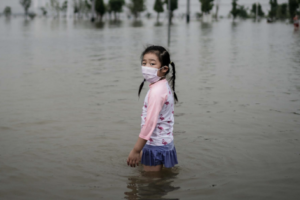
Since the start of the pandemic, the region has been hit by multiple natural and biological disasters. At the same time, climate change has continued to warm the world, exacerbating the impacts of many of these disasters. The Asia-Pacific Disaster Report 2021, which was launched during ESCAP’s Disaster Reslience Week, shows that the pandemic, combined with the persistent reality of climate change, has reshaped and expanded the disaster “riskscape” in Asia and the Pacific.

Resilience in Asia-PacificThe triple threat of disease, disaster and climate change is causing not only considerable human hardship but also significant economic losses. Currently, the annual average disaster-related losses are $780 billion. This could nearly double, to around $1.4 trillion, in a worst-case climate scenario. Choosing a proactive strategy of adapting to natural and other biological hazards would be far more cost-effective at an annual cost of $270 billion, said the report.

WMO Secretary-General Prof. Petteri Taalas urged great ambition to reduce greenhouse gas emissions and to accelerate climate change adaptation.

“If we fail with the climate change mitigation, the impact is going to be felt for centuries or even millennia, so the scale of the problem we are talking about when it comes to climate change, the scale is much bigger,” Prof. Taalas told ESCAP’s Committee on Disaster Risk Reduction.

The new report from the Intergovernmental Panel on Climate Change (IPCC) has highlighted the increasing severity of the physical impacts of climate change because of record concentrations of greenhouse gases. This includes long-term melting of glaciers, snow and ice cover, sea level rise and ocean acidification, which will last for centuries or even thousands of years, Prof. Taalas said in a video address.

“Heatwaves, drought, forest fires, flooding, landslides and tropical storms are becoming more intense, as a result. Last year was the warmest year on record in Asia and we have also seen record breaking flooding, especially in East Asia” Prof. Taalas said.

The ESCAP Committee on Disaster Risk Reduction is charged with addressing the following issues: (a) emergence of cascading risks and extension of the disaster risk-scape; (b) scaling-up multisectoral cooperation frameworks to manage cascading risks; and (c) status of regional co-operation efforts.

WMO was represented in several expert group meetings, panel discussions and side events. WMO and ESCAP have a Memorandum of Understanding to work together to build resilience to climate and disaster risks and the promotion of impact-based early warning services and systems. The two organizations have a long history of cooperation by jointly establishing the Typhoon Committee.

Prof. Taalas stressed the importance of building capacity in Least Developed Countries and Small Island Developing States to adapt to climate change and build resilience, in particular through investments in early warning services.

However, major gaps in observing systems in many parts of the world, including islands and least developed countries in the Asia-Pacific region, have a negative impact on the quality of early warning services. WMO’s new initiative, the Systematic Observations Financing Facility (SOFF) seeks to close these gaps and leverage sustainable financing.

T-Mobile confirmed latest data breach affecting millions of customers

US telecom giant T-Mobile has confirmed their latest data breach affecting nearly 8 million customers was accessed by a hacker, totaling five breaches in the last four years.

Their preliminary analysis showed that almost 8 million current postpaid customers and 40 million records of former or prospective customers, who had at one point applied for credit with the company, were taken in a 'highly sophisticated cyberattack.'

The latest in the series of hacks on the company's customers' data comes on the heels of two attacks in 2020, one in 2019, and another in 2018. This most recent breach is by far the largest.

News broke that a hacker was trying to sell T-Mobile customer data online, data they claimed to have gotten via compromised T-Mobile servers. They claimed the data contained names, addresses, social security numbers (SSN), driver license information, phone numbers and unique IMEI numbers.

ADPC and UNDRR Sign a Statement of Cooperation to Promote Climate and Disaster Resilience

The Asian Disaster Preparedness Center (ADPC) and the United Nations Office for Disaster Risk Reduction (UNDRR) have signed a Statement of Cooperation to strengthen the implementation of the Sendai Framework for Disaster Risk Reduction 2015-2030 (Sendai Framework), promote climate and disaster resilience, encourage knowledge sharing for informed decision-making, and improve risk governance across Asia and the Pacific.

ADPC and UNDRR reaffirmed their commitment to promote climate and disaster resilience as core components of risk-informed sustainable development. Both organizations will work together to enhance the dissemination of regional knowledge on disaster risk, address disaster damage and loss data challenges, and strengthen the analytical and evidence base for regional cooperation to implement the Sendai Framework and the 2030 Agenda for Sustainable Development.

They will collaborate in scaling up the support to countries for the development and implementation of national and local disaster risk reduction strategies in line with national climate change adaptation and national development plans.

The Statement of Cooperation will also strengthen existing collaboration between ADPC and UNDRR in many areas, such as developing online courses on Sendai Framework Monitor, devising a COVID-19 Small Business Continuity and Recovery Planning Toolkit, and the development of disaster risk reduction status reports of countries in Asia and the Pacific.

Promoting transboundary disaster risk management is one of the key points of this Statement of Cooperation, thus both organizations will leverage their existing networks to promote transboundary risk management and fortify collaboration with other regional organizations.

The collaboration will in turn strengthen the implementation of the four Sendai Framework priorities for action and enhance the science-policy-practice interface in disaster risk reduction and climate resilience in Asia-Pacific and beyond.

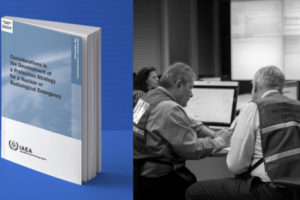
New IAEA Guidance in Emergency Preparedness and Response

How do you create a national strategy to protect people in a nuclear or radiological emergency based on lessons learned, scientific evidence and good practices? A new IAEA publication, Considerations in the Development of a Protection Strategy for a Nuclear or Radiological Emergency provides the concepts and practical considerations needed to build that protection strategy.
“The publication is universally adaptable and addresses the different aspects of an emergency from the direct radiological consequences to protecting against non-radiological aspects, which are decisive for an effective response,” said Svetlana Nestoroska Madjunarova, former counsellor in monitoring and emergency at the North Macedonian Radiation Safety Directorate and author of the publication.
Five main topics are covered in the publication: the concept of a protection strategy for a nuclear or radiological emergency, the basis and process for the development of a protection strategy, processes for justifying and optimizing protection and safety and consultation with interested parties. These five topics provide guidance to those planning a protection strategy, the underlying concepts and they also provide practical guidance on implementation in alignment with the IAEA safety standards and the goals of emergency response as defined in General Safety Requirement Part 7.
The publication also provides an outline for national protection strategies to support national efforts to develop justified and optimised plans to protect health and minimize danger to life and property during and following a nuclear or radiological emergency, as well as specific guidance for the effective, optimal implementation of the strategy in emergency response.
Protection measures should be based on scientifically justified methods and applied only when observations in the field indicate action is necessary. In this manner, maximum protection can be provided with minimum social and economic disruption. Justification in emergency response means taking diverse factors into account to achieve more good than harm. Optimization is a process that applies the resources at hand in the most effective manner to provide the best protection during an emergency.
Core objective
The guidance addresses both the early stages of the emergency response and the subsequent return to normality in the affected areas, while also touching on environmental, economic and other consequences. These considerations, previously addressed in separate publications, are now gathered for the first time in this unified volume.
“Effective emergency response planning requires a holistic approach that addresses all the issues arising during and following an emergency, not solely the initial consequences of the nuclear or radiological emergency,” said David Owen, expert from the United Kingdom on the publication drafting group.
The publication reflects the latest safety requirements and recommendations in emergency preparedness and response and supports their implementation.
“The eventual return to normality following an emergency is an important consideration in the protection strategy,” Madjunarova said. “Countries may expect that in this post-emergency period there is enough time to acquire the relevant social, economic and radiological information needed to make optimal decisions. Lessons learned show that a comprehensive strategy is essential in making and implementing those decisions in a timely manner.”
The publication also offers practical advice on the possible transboundary consequences of a nuclear or radiological emergency to identify potential hazards to aid cooperation with all countries that may be affected by such events to ensure effective and consistent protection of the affected populations and the environment across borders.
1 … 35 36 37 38 39 … 64